The Archive
Every edition of the Yamanaka Factors Report — preserved exactly as it appeared. New editions are archived each time a fresh batch of articles replaces the current one.
Yamanaka Factors in the Wild
Every time the world's biggest podcasts stopped to talk about cellular reprogramming — collected here.
🎙 All-In Podcast — Science Corner


🎙 The Joe Rogan Experience
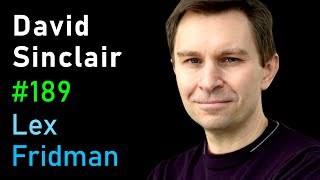
🎙 Lex Fridman Podcast
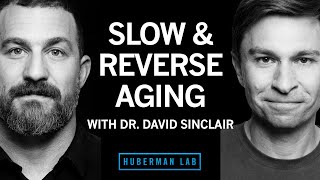
🎙 Huberman Lab

🎙 The Peter Attia Drive

🎙 The Diary of a CEO

What Are Yamanaka Factors?
In 2006, a Japanese scientist named Shinya Yamanaka changed biology forever. He discovered that four ordinary proteins could rewind the clock on a fully mature cell — turning it back into a stem cell capable of becoming any tissue in the body.
The Four Factors
The "Yamanaka factors" are a set of four transcription factors — proteins that regulate gene expression. Together, they can reprogram differentiated adult cells into induced pluripotent stem cells (iPSCs):
A master regulator of pluripotency. Activates stem-cell genes and suppresses differentiation. Central to the reprogramming cascade.
Works in tandem with Oct4 to maintain the pluripotent state. Also plays roles in neural development and brain plasticity.
Balances cell proliferation and differentiation. Helps reset the epigenome to its embryonic state during reprogramming.
A powerful growth-promoting oncogene. Boosts reprogramming efficiency but poses tumor risk — a key safety challenge for therapies.
Why It Matters
The original discovery earned Yamanaka the 2012 Nobel Prize in Physiology or Medicine. Researchers discovered that partial reprogramming can reset epigenetic aging marks while preserving the cell's identity — potentially enabling true biological age reversal in living tissue.
A Brief Timeline
Yamanaka and Takahashi publish the landmark paper: four factors reprogram mouse fibroblasts into iPSCs.
Human cells reprogrammed using the same factors.
Nobel Prize in Physiology or Medicine awarded to Yamanaka and John Gurdon.
Salk Institute demonstrates cyclic partial reprogramming extends mouse lifespan.
David Sinclair's lab restores vision in old mice using OSK factors.
Altos Labs founded with $3B — focused entirely on rejuvenation reprogramming.
First human clinical trials begin. AI-driven discovery accelerates the field.
About This Site
YamanakaFactors.com is an automated news aggregator tracking research, clinical developments, and commercial activity in cellular reprogramming and longevity. Refreshed every Monday and Thursday when new articles are found.
Not a medical resource. Always consult published research and qualified professionals.
Contact
Questions, tips, research suggestions, or press inquiries — we'd love to hear from you.
[email protected]We welcome
- Tips on new research or clinical trials we should cover
- Corrections or feedback on article curation
- Press and media inquiries
- Partnership or sponsorship discussions
- Suggestions for the Videos section